Tuesday, May 12, 2009

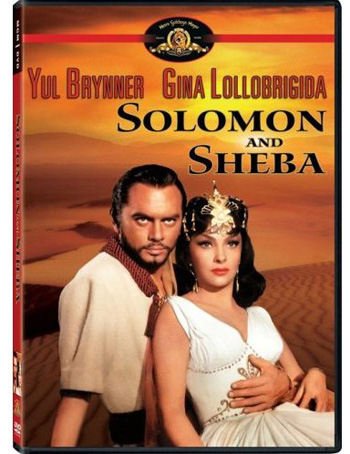
Solomon and Sheba

This week I read a small part of the Kebra Negast. It is a story about King Solomon and the Queen of Sheba. It tells of how they met and the child that came from their meeting. This child then goes on to rule Ethiopia. This story adds some pretty significant back story to Ethiopian royalty. Having ties to prominent Jewish and Christian figures does nothing but increase the power of the kings and queens. In an a prominently christian and Jewish society, have a biblical back story helps reinforce the identity of the nation and gives a rich and important history. Regardless of the truth behind the story, just having it exist can bring a sense of pride and religious significance to the country. This story could affect politics when working with Jewish or Muslim leaders. Jewish leaders may be more inclined to work with people supposedly descended from important biblical Jews, while Muslims may even be offended and be more difficult to work with. This could work the other way around too. Either way, a back story that gives royalty special significance could greatly affect the lives the royalty.

I found out that there was a movie made about Solomon and the queen of Sheba. The whole movie is on youtube, but they don't seem to allow any sort of embedding so if you care to take a look just search Solomon and Sheba on youtube.com.

Sunday, May 3, 2009

Conceptual Blending

Today I read an article called the Analogical Mind. It talks about metaphors and conceptual blending. After a bit of thinking I have decided that one of the main parts of religious studies is using conceptual blending to compare two or more things. We compare things from different parts of the same text, between books, between religions, and between completely different things. My discussion of rowing as a religion, is a half decent example of conceptual blending. Looking at two things and finding similarities and differences in a combined frame of reference. It would be very difficult to compare two religions without conceptual blending. While many are similar, being able to line up the similarities in order to better show the differences is crucial in understanding them. Comparing the different sects of Christianity would be very difficult for someone who has never been exposed to them before without being able to blend and differentiate them. Either way conceptual blending is an important tool that we use more often then we think.

Do religion parodies count as religion?

Last year I first heard about the Invisible Flying Spaghetti Monster (FSM). It was created as a parody in order to prove a point about teaching creationism is school. However a large number of people, mostly atheists and agnostics 'believe' in the FSM. This people are often refered to as Pastafarians or Spagnostics. Even though this religion was created out of parody, more people are starting claim association and are begining to practice the very loose dogma that was set forth by the creator Bobby Henderson.

So does this constitute a real religion? At the moment people do not worship together in large groups, but there is a diffinitve set of symbols and full blown structure and belief system. Bobby has created a complete 'bible' and a full creationist story. This technically fullfills Greers definition by having a set of symbols that lead to lasting beliefs. Does the knowledge that the beliefs themselves are supposed to be a joke actually make the beliefs any less valid? I don't know but I am curious if the FSM is still aorund in 50 years. I wouldn't really be surprized if it doesn't.

Here is a video or two explaining how and why the FSM was created.


Tuesday, April 28, 2009

Translation advice

I read a portion of Saint Augustine's On Christian Teachings. Book 2 to be precise. The most important thing I took from the reading was a set of suggestions for interpreting translations of books. He advises having many sets of the same book but translated by different people, and possibly through different languages. For example, I would need a few copies of the book of psalms, one translated directly from hebrew, another one translated by somebody else, one translated from greek or latin, and so on and so forth. Having multiple copies from different translations can be extremely useful in understanding some passages. If there is a passage that doesn't make sense or sounds funny, cross check it against a different translation. If it is the same at least you know it is probably translated properly and can ask someone of knowledge for help, and if they are different your lack of understanding could be due to a poor translation. Having different sets of translations through different languages can help, because some languages can carry meaning and have different words that will translate into the next language better. So while the direct Hebrew may not make much sense, maybe from Hebrew to Latin to Greek to English will carry the emotion or meaning properly.
I think having a second translation of the book of psalms would have been very useful. Granted Alter provided other possible translations for some passages or phrases, but it would have been interesting as a whole to see how it was done differently.

Friday, April 24, 2009

Churches Charitable?

I know many people who donate money to charity through churches, but is that really the best way to help those in need? I was taught in high school that a good charity should be spending 90% of its budget directly helping people. From what I have heard the Catholic church spends less than 10% on charitable efforts. This is not acceptable. Money donated should be used to help people, not to support a wealth bleeding system. My girlfriends grandmother was asked for 200 thousand dollars in order to cover a down payment for a new church. That particular perish had built a new church less than five years ago. Building new and extravagant buildings is wasting the perishes money.
I am not trying to discourage people from giving to charity. I just think that people should think about where their money is really going, and if it is actually helping people or just helping to pay for the solid gold statue of Jesus. Look at the Bill and Melinda Gates Foundation, now there is a charity run by financially smart people who figure out how to help people the best for the money spent. Well organized charities help people far more efficiently than the average church. What really makes more sense for helping people.

Tuesday, April 21, 2009

Psalm 18

Today I read psalm 18 from the "Book of Psalms" as translated by Alter. This psalm portrays a very fierce and destructive god. This psalm has god being represented first as a preluding earth quake, then as a volcano. Then god tilts the heavens in order to descend to earth and fly around on an "cherub." A cherub is some sort of god like war horse from Canaanite mythology. God then proceeds to destroy David's enemies with hail, fire, arrows, lightning, and water. He rescues David then proceeds to bestow upon him fighting abilities so he can destroy his own enemies. Such as strength, speed, a bronze bow, a shield, and a fearsome god based battle cry.
Many of the images of god are based on pre-Israelite mythological poetry. With some other images coming from Canaanite mythology. Religions evolve in contact with other religions. I would expect images of god to come from different sources. Founders of pre-christianity may have been former pre-Israelites. It perfectly logical for images from the old beliefs to carry into the new ones. It helps to ease the transition for new comers to the religion. Converted Canaanites may have included images from their own mythology in the poetry they wrote. Over time peoples poetry influences the next generation of poetry. The new generation drawing on multiple influences, might very well create a hodgepodge of mythological references. I would be more surprised to see a lack of mythologies than a combination of many.
The image of an omnipotent god flying down from the heavens on a god like war horse, preluded by earth quakes and volcanoes, launching fire and lightning before him, and pushing back the seas is a terrifying image regardless of what your beliefs are. In times of war this exactly the image you would want for your troops. Belief that a massively powerful god will come to help destroy your enemies, or give you the power to destroy your enemies yourself is a great morale boost. Modern christian god is a bit on the tamer side and certainly more hands off than the god of old. I suppose since Christians started fighting Christians there are fewer reasons why one side should be supported over the other. David was saved by his firm belief in god and by following what god preached. That doesn't work as well when both sides are christian. Makes you wonder if truly religion based war broke out if violent imagery of god would resurface. I suppose historically non violent Islam is being reinvented by some to support fighting non muslims...
Friday, April 17, 2009

Missunderstood

I learned recently that a few of my friends are involved in religions that I know virtually nothing about. Apparently Quakers can don't have to believe in god to be faithful. Some of them believe in a life force, and simply avoid killing things. I found it really interesting that a Christian sect didn't require believing in god. Everything I know about Christianity focuses on the single omnipotent god. I can't help but wonder how little I know about other sects of Christianity, or other religions for that matter.
How many choices to do people make based on their faith? I tend to think that its a large amount, and the only way to understand those choices is to understand other peoples faith. I think a substantial portion of conflicts could be resolved in the world, but getting to know to the other side, or for that matter your "own" side. I was raised Catholic but stopped attending church was I was young. I find that I have trouble understanding devote Christians motivations for many of their choices. Part of me is tempted to read to the bible, just to figure out why certain passages are so important and guide peoples lives. After that I might go read a Koran or read up on other religions in general. Lack of understanding can only lead to conflict. There is enough conflict in the world. Its time to learn how to avoid it.